
Rule34 Explained: Stream in Clear HD Quality for Free
The internet has a peculiar talent for turning simple jokes into entire online communities. Rule34 is one of the most recognizable examples. What started as a provocative observation about internet culture eventually became a widely used term associated with adult fan art, searchable image archives, online fandoms, and the wider history of internet memes.
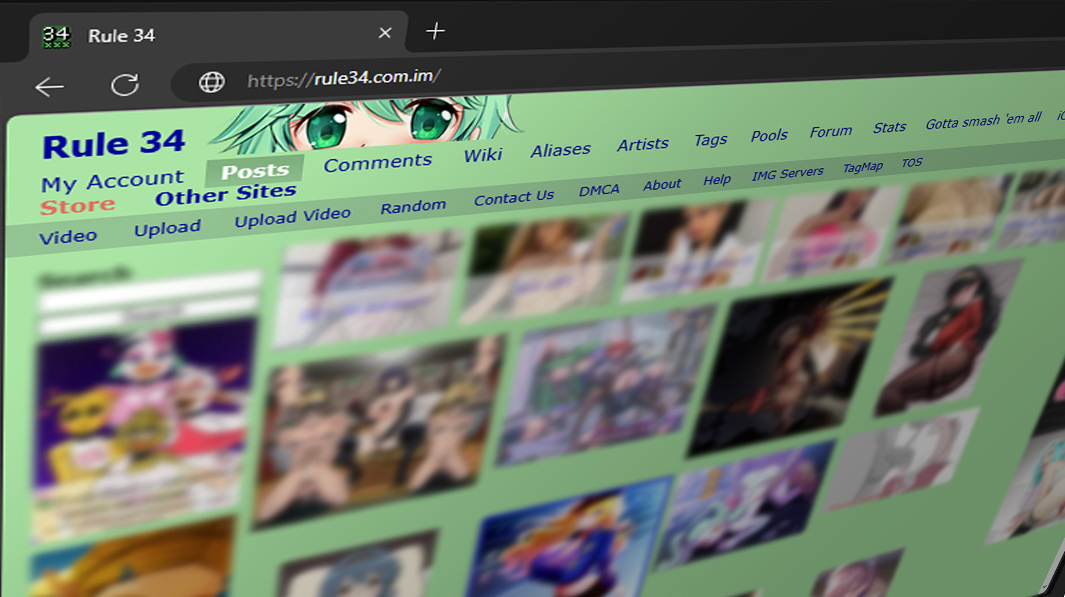
But Rule34 is not simply the name of one website. Depending on the conversation, it can describe an internet meme, a category of fan-created material, or a collection of websites built around searchable image archives. That distinction is important because someone asking what does Rule34 mean? may be looking for cultural history, while another person searching for Rule34 sites may be trying to understand how imageboard platforms operate.
This guide explains the meaning of Rule34, where the expression came from, why it became associated with anime and manga, how booru-style websites organize images, what mobile users should know, and which safety considerations matter when visiting unfamiliar websites.
What Is Rule34?
Rule34 is an internet meme suggesting that adult-oriented material exists about virtually any imaginable subject. It began as an exaggerated observation about internet culture rather than a formal rule governing online behavior.
The expression became memorable because it captured something users repeatedly observed as online fandom grew. Popular fictional characters, games, television series, comics, and other cultural subjects often inspired unofficial reinterpretations created by fans.
Today, Rule34 commonly carries several overlapping meanings. It may describe the original internet joke, adult-oriented fan artwork inspired by fictional characters, or websites that organize such artwork through searchable tags and image galleries.
These meanings are related, but they should not be treated as identical. The original Rule34 concept existed independently of the many websites that later adopted the expression.
Why Is It Called Rule 34?
The number comes from the historical Rules of the Internet, a loose collection of humorous observations and sayings shared across early online communities.
These so-called rules were never a formal technical standard. They functioned more like community jokes, recurring expressions, and commentary about recognizable patterns of online behavior.
Rule 34 became one of the best-known entries because its central idea could be applied to almost any popular subject. Whenever a new fictional character or entertainment franchise appeared, internet users could reuse the same joke.
The number itself does not identify a specific company, application, image archive, or universal internet policy.
What Does Rule34 Mean on Social Media?
On Reddit, X, discussion forums, gaming communities, and other social platforms, Rule34 is frequently used as cultural shorthand.
A user might mention Rule34 when discussing a newly released game character, animated series, movie, or internet trend. In those conversations, the expression often works as a joke about how quickly fandom communities create alternative interpretations of popular characters.
That means a reference to Rule34 does not necessarily point toward a specific website. Sometimes it is simply a piece of internet slang.
"Rule34 became memorable because it works like reusable internet vocabulary. The subject changes, but the joke can remain recognizable for years."
Dr. Eleanor Brooks, fictional digital culture researcher
The History of Rule34
The history of Rule34 is connected to the early 2000s, when webcomics, message boards, imageboards, chat communities, and independent websites helped shape modern meme culture.
A frequently mentioned milestone is a 2003 webcomic created by Peter Morley-Souter, also known online as TangoStari. The comic expressed surprise after encountering an adult parody involving familiar fictional characters.
The underlying idea may have circulated in different forms before that moment, which makes the history more complicated than simply assigning one exact invention date. What is clear is that the early 2000s provided the environment in which the expression became recognizable and repeatable.
How Rule34 Spread Across the Internet
During the early web era, expressions could move quickly between forums, imageboards, personal websites, IRC conversations, webcomics, and meme communities. Rule34 benefited from this decentralized structure because no single platform needed to control the phrase for it to spread.
As internet slang dictionaries and collections of the Rules of the Internet became more visible, the expression reached users who had never encountered the original communities.
Later, image archives and booru-style platforms introduced searchable tags, character labels, franchise categories, and artist metadata. This changed the practical meaning of Rule34 for many users. It was no longer only a joke circulating in discussions; it also became associated with databases that could organize large volumes of fan-created artwork.
Why Has Rule34 Lasted So Long?
Most internet memes depend on a particular image, celebrity moment, video, or short-lived event. Rule34 behaves differently because it describes a pattern that can repeatedly attach itself to new cultural subjects.
A movie trend may disappear. A particular meme image may become outdated. Rule34 can become relevant again whenever a new fictional universe attracts an enthusiastic fan community.
This adaptability is one reason the expression has remained familiar across multiple generations of internet users.
Is Rule34 a Website or an Internet Rule?
This is one of the most common questions surrounding the term.
Rule34 originally refers to an internet expression, not one single website. Over time, independent websites adopted the name because users already associated it with adult-oriented fan material.
As a result, searching for Rule34 online may reveal multiple domains, archives, mobile interfaces, mirrors, or similarly named services. These should not automatically be assumed to belong to the same operator.
Is There an Official Rule34 Site?
There is no universally authoritative website that represents the original Rule34 internet meme.
The expression developed through internet culture rather than through one company or centralized platform. Websites that include Rule34 in their branding are independent services with their own design choices, content policies, account systems, moderation practices, and advertising arrangements.
This distinction matters because users sometimes assume that the first result they encounter must be the original or official Rule34 website. The history of the expression does not support such a simple interpretation.
Does Rule34 Require Registration?
Rule34 itself does not require registration because it is simply an internet expression.
Individual websites may handle accounts differently. Some archives allow visitors to browse without creating an account, while others reserve certain preferences, favorites, commenting tools, or personalization settings for registered users.
Anyone considering registration on an unfamiliar platform should first review what information the service requests and whether creating an account provides a meaningful benefit.
How Do Rule34 Sites Work?
Many websites associated with Rule34 operate like specialized image databases. Their most important feature is often not the gallery itself, but the system of tags used to classify artwork.
Instead of placing every image into a rigid folder structure, a platform can attach multiple descriptive labels to a single upload. Those labels may identify the fictional character, franchise, artist, visual style, content rating, submission date, or other relevant attributes.
This approach makes very large image collections easier to search.
Why Are Tags So Important?
Imagine an archive containing hundreds of thousands of images. A traditional folder structure would quickly become difficult to navigate because one illustration might belong to several categories at the same time.
A tagging system solves that problem by allowing one image to appear in multiple searches without requiring several duplicate copies.
For example, an illustration inspired by a game could potentially be associated with the game's title, a character name, an artist name, and a visual style. Search systems can then combine or exclude tags to narrow the results.
The usefulness of this model depends heavily on consistent tagging. If users apply different names to the same character or franchise, search results can become fragmented. Well-maintained archives therefore spend significant effort on tag aliases, corrections, moderation, and metadata consistency.
How Does Rule34 Search Usually Work?
Most booru-style search systems begin with one or more tags. A user enters a character name, franchise name, artist tag, or another descriptive term. The database then returns images carrying those labels.
More advanced platforms may allow several tags to be combined. Some also support tag exclusions, rating filters, date sorting, popularity sorting, or saved searches.
This explains why experienced users often think of booru websites as databases rather than ordinary image galleries.
Rule34 vs Booru: What Is the Difference?
Rule34 and booru are frequently mentioned together, but they describe different things.
Rule34 is primarily an internet concept and adult-content label, while a booru is a style of tag-based image archive.
The word booru became strongly associated with imageboard platforms inspired by Danbooru. Over time, many specialized communities adopted similar database structures for different types of artwork.
A booru can focus on anime illustrations, general fan art, particular franchises, original characters, safe-for-work artwork, adult material, or a mixture of categories.
| Feature | Rule34 | Booru |
|---|---|---|
| Primary meaning | Internet meme and adult fan-content term | Tag-based image archive format |
| Original purpose | Humorous observation about internet culture | Organizing and searching large image collections |
| Tag system | Common on associated archive sites | Usually a central feature |
| Content focus | Often adult-oriented | Depends on the individual archive |
| Accounts | Depends on the website | Depends on the website |
| Mobile access | Depends on the platform | Depends on the platform |
The easiest way to remember the difference is that Rule34 describes an idea and content category, while booru describes a method of organizing images.
Why Is Rule34 Associated With Anime and Manga?
Anime and manga have exceptionally active international fan communities. Fans regularly produce illustrations, character redesigns, comics, animations, crossover artwork, alternate storylines, and other derivative creations.
Because anime-inspired artwork became especially prominent in imageboard culture, booru archives and Rule34 discussions developed significant overlap.
That does not mean anime fan art is automatically Rule34 material. Most anime-related artwork has nothing to do with adult content.
The association exists because anime fandom, imageboard culture, tagging systems, and online fan-art communities developed alongside one another.
Why Is Rule34 Mentioned With Video Games?
Modern games frequently introduce highly recognizable characters with detailed designs, strong personalities, and large international audiences.
Those characteristics naturally encourage fan creativity. Players may create illustrations, cosplay, animations, memes, character redesigns, and unofficial stories.
Adult-oriented fan art represents one part of that wider creative ecosystem, which is why Rule34 references frequently appear in gaming discussions.
What Is the Connection Between Rule34 and 4chan?
4chan became an important distribution point for many early internet memes and community expressions. Its anonymous discussion format encouraged rapid remixing and sharing of jokes between users.
The Rules of the Internet became closely associated with this culture, and Rule34 gained additional visibility through imageboard discussions.
However, describing 4chan as the sole creator of Rule34 oversimplifies its history. The expression developed across a wider network of forums, webcomics, message boards, chat communities, and early meme culture.
"Internet history is rarely as tidy as one creator, one website, and one date. Memes often become recognizable through repeated sharing across many overlapping communities."
Sophia Bennett, fictional digital media historian
Is Rule34 Safe?
Whether a Rule34-related website is safe depends on the individual platform, its advertising system, its moderation practices, its download behavior, and the way a visitor interacts with it.
Rule34 itself is not a computer virus. It is a term from internet culture. The security question concerns specific websites using that term.
Unfamiliar adult-oriented websites can sometimes expose visitors to aggressive advertisements, misleading buttons, redirects, browser notification requests, fake security warnings, or suspicious software downloads.
Does Rule34 Have Viruses?
A website name cannot tell you whether every advertisement, redirect, or download connected to it is trustworthy.
One of the most common mistakes is confusing a deceptive advertisement with part of the actual website. A large button may appear to promise an image download while actually opening another domain. A fake warning may claim that the device is infected and instruct the visitor to install software.
Requests to install unfamiliar browser extensions, executable files, mobile applications, security cleaners, or notification permissions should be treated cautiously.
Simply viewing ordinary image files through an updated mainstream browser is very different from downloading unknown programs.
Is Rule34 Safe on Mobile?
Mobile users face many of the same risks as desktop visitors, but smaller screens can make misleading controls harder to identify.
An unexpected redirect can also feel more convincing on mobile because the new page may completely replace what the user was viewing.
Android users should be cautious when a website encourages installation of an APK from outside familiar distribution channels. An ordinary image website should not need broad access to contacts, messages, accessibility controls, device administration, or other unrelated permissions.
iPhone and iPad users should similarly avoid unfamiliar configuration profiles, unusual calendar subscriptions, and prompts that request unnecessary settings changes.
Is Rule34 Safe to Download From?
The answer depends heavily on what is being downloaded.
An ordinary image file is fundamentally different from an executable program, browser extension, compressed software package, or unofficial mobile application.
Users should be suspicious when a website claims that special software is required simply to browse images. Unknown executable files can create risks that ordinary browser viewing does not.
Keeping the browser and operating system updated reduces exposure to known vulnerabilities, but software updates cannot protect users from every deceptive download or social-engineering trick.
Rule34 Browser Safety and Privacy
Security and privacy are related but different issues.
A website could avoid obvious malware while still collecting substantial information about visitors through advertising networks, cookies, analytics systems, account activity, and browser fingerprinting.
Users should therefore evaluate privacy separately from basic device security.
What Does Private Browsing Actually Do?
Private or incognito browsing mainly changes what the browser stores locally after the session.
It can reduce the amount of browsing history, cookies, and form information retained on the device, but it does not make someone invisible to websites, network administrators, service providers, or every tracking system.
Private browsing should therefore be understood as a local privacy feature rather than complete anonymity.
Why Should Account Reuse Be Avoided?
Reusing the same password across unrelated websites creates unnecessary risk. If one service exposes account credentials, attackers may attempt those credentials elsewhere.
Users who decide to create accounts on unfamiliar communities should avoid sharing unnecessary personal details and should use unique passwords rather than recycling credentials from important services.
"A recognizable domain name is not a security guarantee. What matters is how the actual website behaves, what it asks you to install, and what information it collects."
Daniel Reeves, fictional cybersecurity educator
Does Rule34 Have Age Restrictions?
Rule34-related websites generally involve adult-oriented material and are not intended for children.
Access requirements can vary considerably between platforms and regions. Some websites display age-confirmation pages, while others provide content-rating controls or account settings.
The presence of an age warning does not automatically indicate strong moderation, and the absence of one should not be interpreted as evidence that the material is suitable for younger audiences.
Parents and guardians concerned about accidental exposure can use device-level content controls, browser filtering tools, search restrictions, and family safety settings.
What Are Rule34 Alternatives?
The best alternative depends on why someone was searching for Rule34 in the first place.
A person primarily interested in fan art may prefer a mainstream creator-focused community where artists publish portfolios, illustrations, character studies, and fandom work.
Someone interested in anime and manga illustrations may prefer an established illustration community with strong tagging and content-filtering controls.
A user interested mainly in booru technology may prefer a safe-for-work image archive that demonstrates the same tagging model without focusing on adult content.
These alternatives can provide many of the discovery features people associate with Rule34 sites while offering a different content focus.
DeviantArt as a General Fan-Art Alternative
DeviantArt is centered on digital art, illustrations, photography, character designs, and creator communities. It is useful for people who care about following individual artists and seeing broader portfolios rather than browsing anonymous image collections.
The platform also offers browsing controls designed to manage how potentially sensitive material appears.
Pixiv for Anime and Manga Artwork
Pixiv is strongly associated with illustration, anime-inspired artwork, manga, original characters, and creator communities.
Its tagging system makes it useful for discovering artists and related works, while account preferences provide controls for age-restricted categories.
Safe-for-Work Booru Communities
People who primarily enjoy the searchable tagging structure of booru websites can look for archives that emphasize general-audience artwork.
These communities preserve features such as character tags, franchise tags, artist tags, and structured searching while placing greater emphasis on non-explicit material.
| Platform Type | Primary Strength | Tag Search | Creator Focus |
|---|---|---|---|
| General art community | Artist portfolios and fan art | Available | Strong |
| Anime illustration community | Anime, manga, and original illustrations | Strong | Strong |
| Safe-for-work booru | Structured image discovery | Central feature | Varies |
| Portfolio platform | Professional and independent artwork | Varies | Very strong |
What Makes a Good Image Archive?
A useful image archive is not simply the one containing the largest number of files.
Search quality matters because users need consistent character names, franchise labels, artist metadata, and rating information. Without consistent tagging, even a massive archive becomes difficult to navigate.
Creator attribution is also important. A well-maintained database should make it easier to understand who created an image and where the original work came from whenever that information is available.
Moderation transparency also affects usability. Visitors benefit when reporting systems, content ratings, account rules, and moderation practices are clearly explained.
Finally, a strong archive should not require unnecessary software installations just to view ordinary images.
Rule34, Artificial Intelligence, and Modern Fan Art
The rise of generative artificial intelligence has introduced a new dimension to online fan-art communities.
Modern image-generation systems can create fictional scenes rapidly, which has changed discussions around authorship, attribution, training data, creator identity, and the scale of image production.
For tag-based archives, this also creates practical moderation challenges. Platforms may need to distinguish traditional illustrations from AI-generated images, establish disclosure rules, and decide whether separate tags or categories are necessary.
These developments show that Rule34 culture is not frozen in the early 2000s. Like many internet communities, it continues to evolve alongside new creative technologies.
Is Rule34 Free?
The Rule34 concept itself is simply internet slang and does not have a membership fee.
Individual websites using the expression may operate under different business models. Some rely on advertising, some offer optional accounts, and others may include premium features or external services.
Users should pay close attention when an unfamiliar website suddenly requests payment details, especially if the request appears after clicking an advertisement or redirect.
Free browsing and paid services should be clearly distinguishable. Confusing or misleading payment prompts are a reason to leave a site rather than continue.
Users should evaluate mobile sites using the same caution they would apply on a desktop browser.
Why Is Rule34 Mentioned on Twitter or X?
Rule34 references appear on X because the platform hosts conversations about games, animation, entertainment, fandoms, memes, digital artists, and online culture.
A Rule34 mention may appear as a joke beneath a character announcement, as commentary on fan reactions, or as part of a broader discussion about internet culture.
Because the term is widely understood as shorthand, users often mention it without explaining its history.
Why Is Rule34 Such a Famous Internet Meme?
Rule34 combines simplicity, surprise, and endless reuse.
Anyone who understands the basic idea can apply it immediately to a new context. That makes it especially effective as a meme.
It also reflects one of the internet's defining characteristics: communities can create enormous amounts of niche content around almost any subject.
That observation remains recognizable even as specific websites and social platforms change.
The Bigger Picture Behind Rule34
Looking beyond its adult associations, Rule34 provides an interesting case study in how internet culture evolves.
A short joke from early online communities became digital vocabulary. That vocabulary became associated with fan art. Fan-art archives adopted increasingly sophisticated tagging systems. Social platforms then carried the expression into new generations of users.
At the same time, changes in mobile browsing, privacy expectations, content moderation, image-generation technology, and creator communities continue to reshape the environment surrounding it.
Rule34 therefore tells a much broader story about the internet: a story about remix culture, decentralized communities, fandom, searchable databases, memes, and the unexpected longevity of online language.
Conclusion
Rule34 is best understood as an internet expression that grew into a wider cultural label associated with adult fan art and searchable image communities.
It is not one universal website, one application, or one centralized service. Its meaning changes depending on whether someone is discussing meme history, social media slang, booru technology, fandom culture, or adult image archives.
Understanding the distinction between Rule34 as a meme and websites that use the term makes online discussions much easier to follow.
Anyone visiting unfamiliar Rule34-related sites should also pay attention to browser behavior, redirects, download requests, account privacy, mobile permissions, content filtering, and age restrictions.
Viewed from a wider perspective, Rule34 remains noteworthy because it demonstrates how a simple internet joke can survive for decades and become part of the language people use to describe online fandom and digital creativity.
Frequently Asked Questions About Rule34
What does Rule34 mean?
Rule34 is an internet meme suggesting that adult-oriented material can be found about almost any imaginable subject. The expression later became associated with fan-created artwork, image archives, and online fandom communities.
Where did Rule34 come from?
Rule34 developed through early internet culture in the 2000s. A 2003 webcomic is frequently associated with its popularization, although similar ideas and expressions circulated through online communities around the same period.
Is Rule34 a website?
Rule34 originally describes an internet expression rather than one website. Multiple independently operated websites later adopted the name or related terminology for adult-oriented image archives.
Does Rule34 require an account?
The Rule34 concept does not require registration. Individual image archives may allow anonymous browsing or may offer optional accounts for features such as favorites, preferences, tagging, or community participation.
Does Rule34 have viruses?
Rule34 itself is a term, not malicious software. Security risks depend on the specific website. Suspicious redirects, fake download buttons, unknown applications, browser extensions, and misleading security alerts should be avoided.
Is Rule34 safe on mobile?
Mobile safety depends on the website and user behavior. An updated browser is generally safer than installing unknown third-party applications. Unexpected APK downloads, excessive permissions, configuration profiles, and aggressive redirects deserve particular caution.
What are Rule34 alternatives?
People interested primarily in fan art can use general art communities, anime illustration platforms, artist portfolio services, or safe-for-work booru archives. These options can provide tagging and artwork discovery without making explicit material their main focus.